


When Vanta's design system team was stuck in reactive mode — no clear goals, no measurable impact, and a growing sense of burnout — they brought in Pixelfat to reset the strategy. Over seven months, we transformed Alpaca from an unfocused internal tool into a measurable driver of product quality across five verticals.
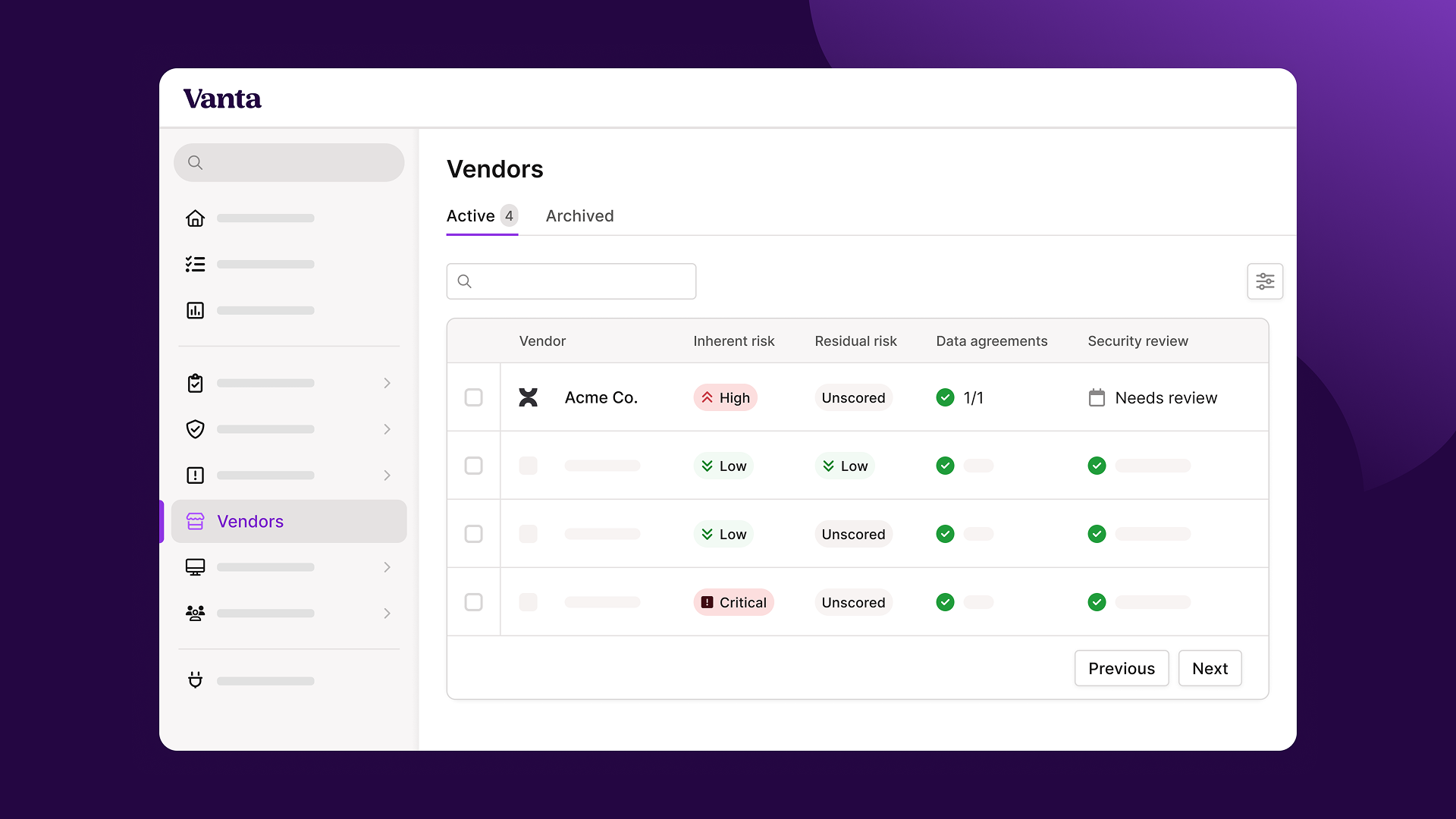
The challenge
Vanta's Alpaca design system existed, but it wasn't working for the team. Work was reactive, priorities were unclear, and there was no way to demonstrate value to leadership. The team was busy but couldn't show impact — a common failure mode for design systems at scale.

Holistic Audit
We started by getting an honest picture of the system's current state. That meant talking to designers, engineers, and PMs to understand where Alpaca was helping, where it was getting in the way, and what the broader product org actually needed from it.

“Jennifer and the Pixelfat team brought strategic insight, practical expertise, and execution excellence to help us scale effectively.”

— Deb Kawamoto, VP of Design, Vanta
defining success
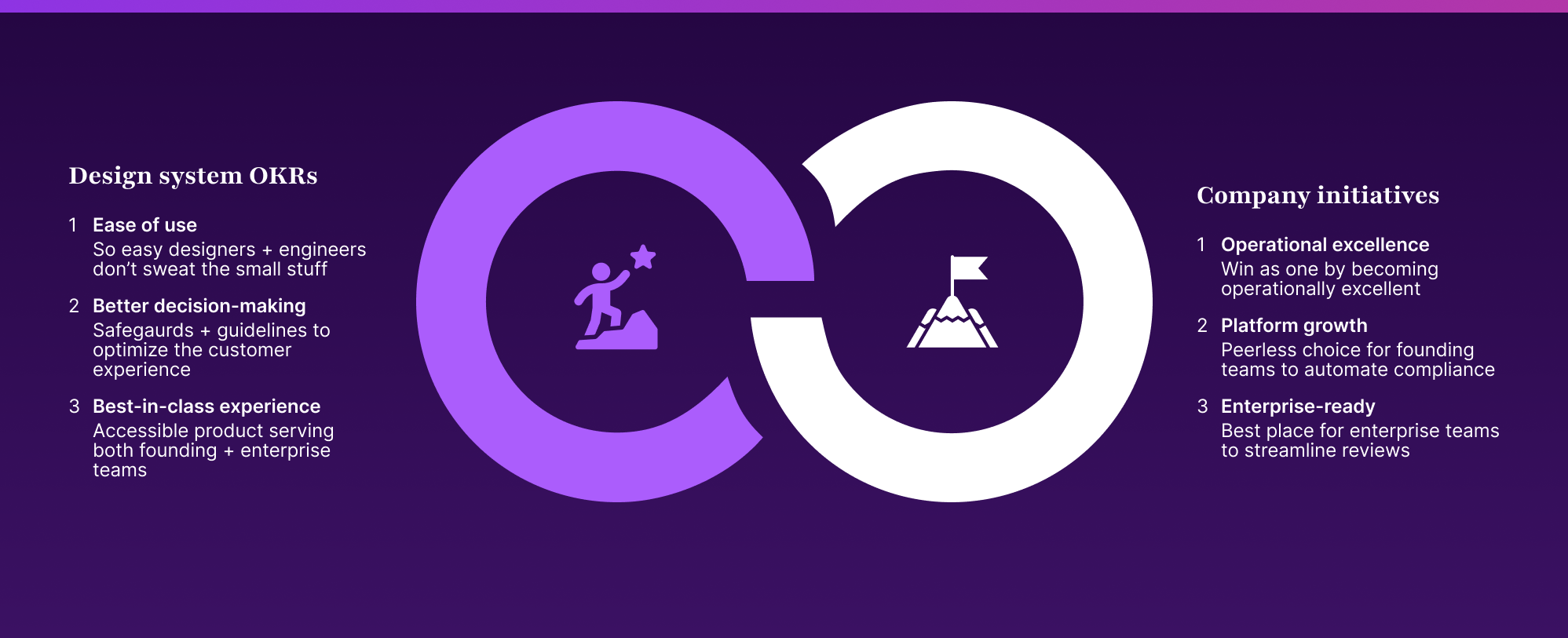
Design systems don't fail because of bad components — they fail because nobody agrees on what "good" looks like. We ran workshops to align the team on OKRs and tie those objectives directly to Vanta's business initiatives. For the first time, the design system had goals that the rest of the company could understand.
building the measurement system
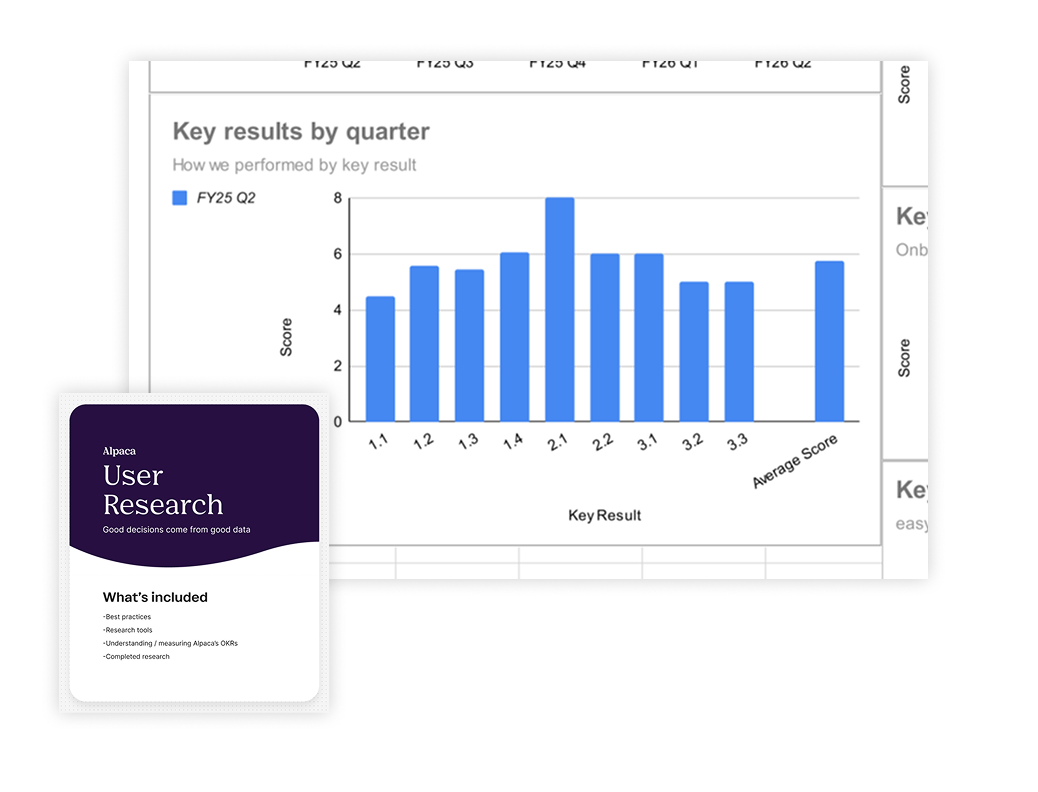
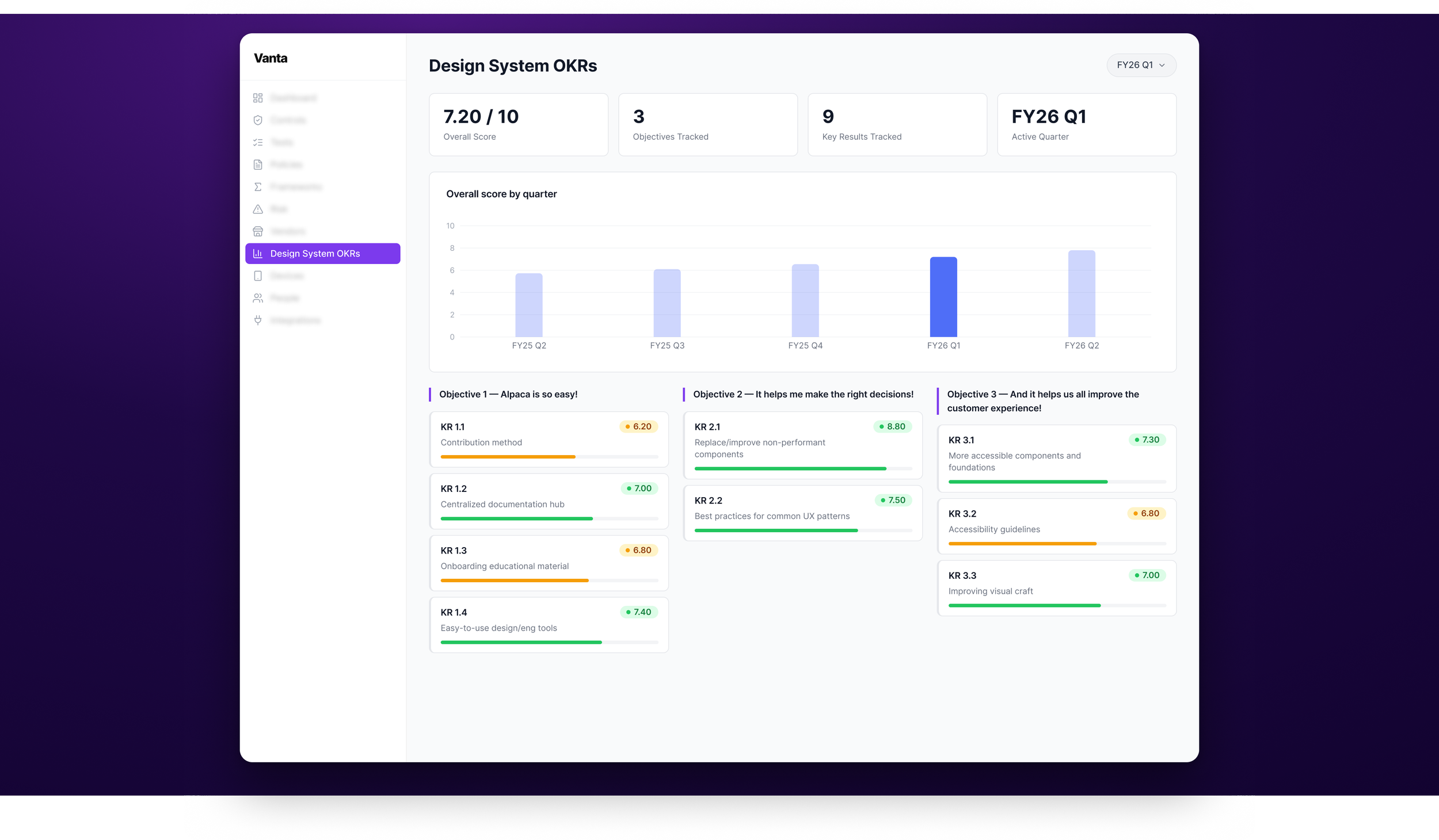
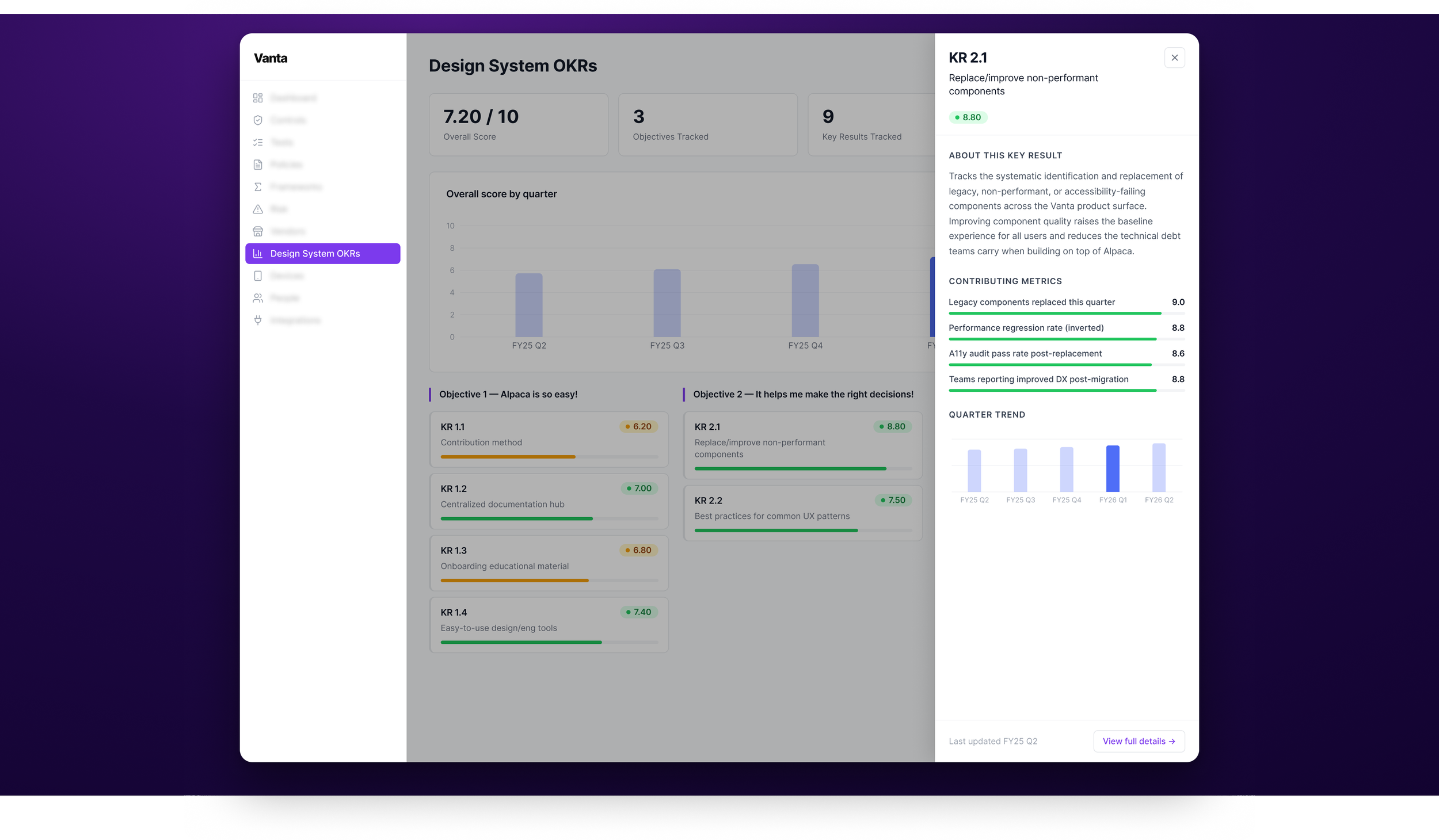
With goals in place, we built the infrastructure to track them. That meant defining KPIs across three tiers — ease of use, performance, and design craft — then implementing a combination of team satisfaction surveys and quantitative consumption metrics to track progress quarter over quarter.
governance and rituals
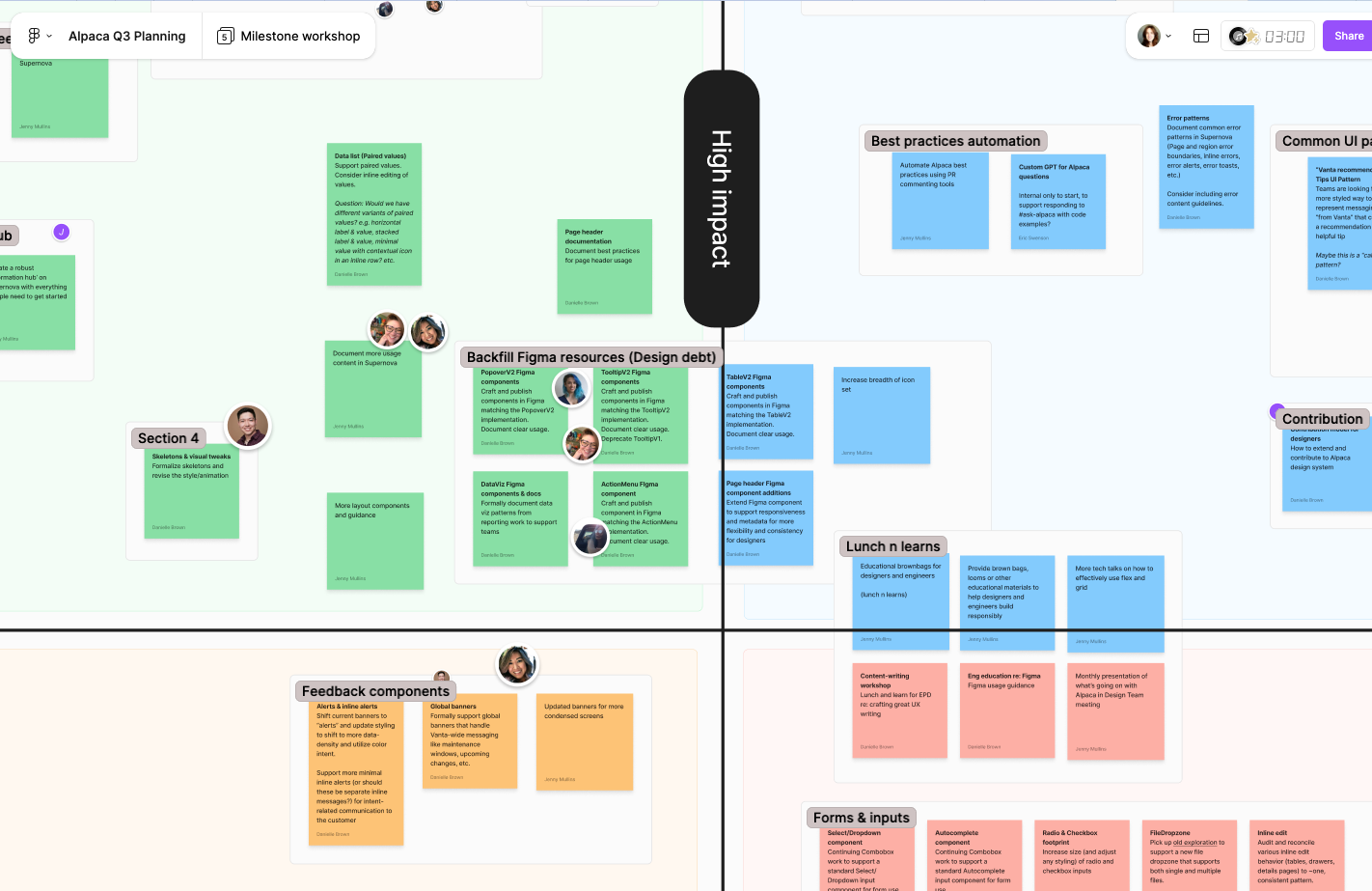
Metrics alone don't create momentum. We established feedback channels, prioritization frameworks, and quarterly evaluation cycles so the team could stay aligned without constant escalation. This gave the design system team the structure to operate more like a product team — with a roadmap, a backlog, and a clear process for incorporating user feedback.
The outcome
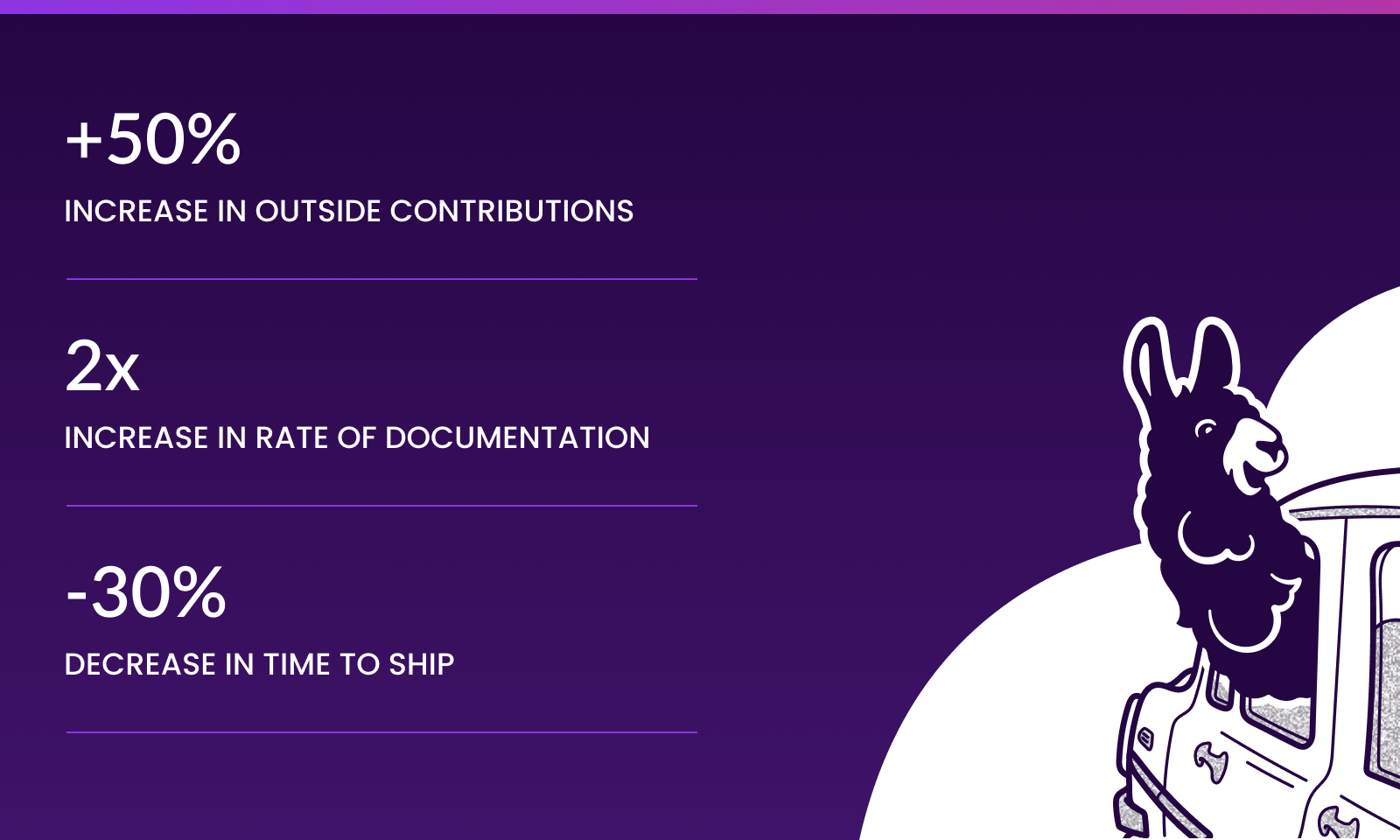
By the end of the engagement, the Alpaca design system was operating with a defined vision, measurable KPIs, and a plan to triple its organizational impact. Team output increased by 50%, consistency improved across five product verticals, and leadership had a clear view of the design system's ROI — for the first time. The dashboard built to track this work was adopted by the team for ongoing quarter-on-quarter reporting.
More case studies
Nextdoor: Your local neighborhood design system

Coffee Meets Bagel: Helping people make a genuine connection

OMGyes: Using design to understand the science of sex

Plangrid: The power of collaborative user testing